save
$55.01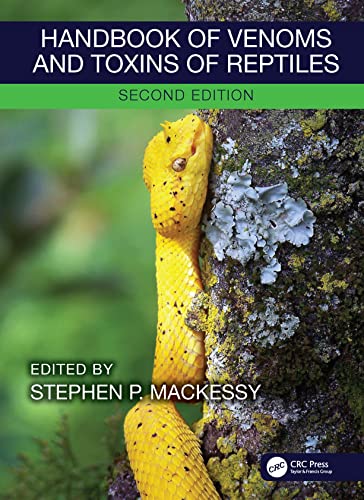
Handbook of Venoms and Toxins of Reptiles 2nd Edition Mackessy
The definitive second edition of Mackessy’s authoritative reference on reptile venoms, toxins, and snakebite management — expanded and updated for researchers and clinicians.
Want to preview before you buy? Click Request Free Sample and tell us which chapter or pages you’d like to see, along with your email address. We’ll send you those pages from the eBook so you can be sure it’s the right one before buying.
- Instant download & lifetime access Available as soon as your payment is confirmed. Your download link is also sent to the email address you provide at checkout, and you can download your purchased eBook anytime from My Account → Downloads with unlimited downloads. An account is created automatically using the same email address.
- Own your eBook Receive the available PDF/EPUB file directly after purchase. No rental or temporary access — download and keep your eBook for personal use with lifetime access.
- Full refund guarantee If the eBook you receive does not match the details and description provided on the product page, contact [email protected] and we’ll issue a full refund within 24 hours.
- Secure payment through PayPal Pay securely by debit or credit card or with your PayPal account. Your card details are processed by PayPal and are never stored on our site.
$44.99$100.00
The Problem This Book Solves
Reptile envenomations remain a critical global health challenge, with snakebites classified as a neglected tropical disease by the World Health Organization. Researchers, clinicians, and toxicologists face a persistent problem: accessing comprehensive, up-to-date, and authoritative information on the vast diversity of reptile venoms, their toxins, and clinical management. Scattered literature, outdated texts, and narrow-focus monographs leave critical gaps in knowledge — gaps that this volume is designed to fill.
About Handbook of Venoms and Toxins of Reptiles 2nd Edition Mackessy
Handbook of Venoms and Toxins of Reptiles, Second Edition, edited by Stephen P. Mackessy and published by CRC Press in 2021, is the definitive reference work in toxinology and herpetology. This greatly expanded edition captures the explosive growth in the field, with substantial new content and contributions from many new expert authors. Spanning more than 650 pages, the handbook provides a systematic, research-grounded treatment of reptile venom systems — from molecular evolution and toxin structure-function relationships to venom ecology, medical management of envenomation, and the burgeoning field of venom-derived drug discovery.
This is not a light revision; it represents a thorough reworking of the first edition, with the majority of material being entirely new. The book integrates cutting-edge omics technologies, clinical advances, and global perspectives on venomous reptiles and their impact on human health.
Is This Book Right for You?
Toxinology researchers and graduate students will find this the single most comprehensive single-volume resource on reptile venoms currently available. Clinical toxicologists, emergency physicians, and medical personnel working in regions with high snakebite incidence will benefit from detailed chapters on venom pathophysiology, antivenom strategies, and snakebite management protocols. Herpetologists and evolutionary biologists will gain deep insights into the ecology, diversity, and evolutionary drivers of venom systems across reptiles. Pharmaceutical and biotechnology scientists exploring venom-derived bioactive molecules for drug leads will discover extensive coverage of toxin pharmacology and therapeutic potential. Finally, curators of zoological collections and venom laboratories, as well as informed serious amateur herpetoculturists, will find authoritative data on venom composition and handling safety.
What You Will Learn
- The molecular diversity and evolution of reptile venom toxins, including three-finger toxins, phospholipases A2, snake venom metalloproteinases, and many others.
- Advanced genomic, transcriptomic, and proteomic approaches used to characterize venom composition and decipher toxin gene families.
- Venom ecology and functional variation — how diet, environment, and phylogeny shape venom cocktails across snake and lizard lineages.
- The pathophysiology of envenomation, covering systemic effects, local tissue damage, and coagulopathy mechanisms in detail.
- Evidence-based clinical management of snakebites, including first aid, antivenom administration, and supportive care protocols.
- Antivenom development, production, and global availability, with discussion of challenges in low-resource settings.
- Venom-derived bioactives and drug discovery pipelines, highlighting compounds with therapeutic applications in cardiovascular, neurological, and oncological diseases.
- The global epidemiology and burden of snakebite envenomation, with a focus on WHO neglected tropical disease priorities.
- Taxonomic coverage of venomous reptiles worldwide, including elapids, viperids, colubrids, and helodermatid lizards.
How It Compares
No competing reference matches the breadth and currentness of this handbook. Older texts, such as the multi-volume Venomous Animals and Their Toxins or scattered journal collections, lack the integrated molecular and clinical perspective of the Mackessy volume. Compared to online databases, this handbook offers a curated, peer-reviewed synthesis that connects fundamental venom biology directly to medical and applied contexts. The second edition’s inclusion of entirely new author teams and expanded topic areas — especially in genomics, structural biology, and translational toxinology — makes it substantially more current than the previous edition or any single-author monograph. Its publisher, CRC Press, is an imprint of Taylor & Francis Group, ensuring rigorous editorial standards and a legacy of authoritative scientific publishing.
Behind the Book
Editor Stephen P. Mackessy is Professor of Biological Sciences at the University of Northern Colorado, where his research lab has been a leading center for snake venom evolutionary biology and toxin characterization for decades. He has authored numerous peer-reviewed papers and book chapters on venom composition, enzyme function, and the ecological roles of toxins. The contributing authors — a global cohort of expert toxicologists, herpetologists, and clinicians — represent leading institutions in the field. CRC Press, with a history stretching back to 1903, is one of the most respected names in scientific and medical publishing, known for high-quality handbooks and reference works that serve as gold standards in their disciplines. This combination of expert editorial leadership and institutional publishing authority gives the book strong E-E-A-T credibility.
Final Assessment
Unequivocally, yes — for anyone professionally engaged with reptile venom research, clinical toxicology, or herpetology, this handbook is an indispensable investment. The expanded second edition is not merely an update but a substantial re-envisioning of the field, with new chapters, new data, and new perspectives that reflect the rapid advances of the last decade. At more than 650 pages, the depth of coverage per topic is exceptional. Compared to assembling a custom collection of reprints and online resources, owning this single authoritative volume saves countless hours and provides a coherent framework for understanding the whole toxinology landscape. The digital edition offers searchable access to the full text, a significant advantage for quick reference and research.
Add Handbook of Venoms and Toxins of Reptiles 2nd Edition Mackessy to Your Library
Whether you are a herpetologist investigating venom evolution, a clinician managing envenomation cases, or a researcher seeking the next breakthrough in venom-derived therapeutics, this handbook delivers the comprehensive, authoritative knowledge you need. This is the 2021 second edition from CRC Press — the most current and comprehensive reference on reptile venoms and toxins available. Add to cart now and bring this vital resource into your library or laboratory.
Related products

A General Textbook of Entomology, Ninth Edition – Imms
$49.99A General Textbook of Entomology, Ninth Edition – the definitive classic by A. D. Imms covering insect anatomy, physiology, and classification. Own the authoritative reference today.
$149.00-
Campbell Biology 11th Edition
$23.99Master biology with Campbell Biology 11th Edition ebook – the definitive college text by Urry et al. Get instant digital access now.
$51.00 -
Biochemistry: Concepts and Connections (2nd Edition)
$34.99Master biochemistry fundamentals with the 2nd Edition of Biochemistry: Concepts and Connections. Visual, real-world approach. Get your copy today!
$91.00 -
Textbook of Pharmacognosy Third Edition Mohammed Ali
$23.00Master crude drugs, chemical constituents, therapeutic uses, Ayurvedic formulations, and phytochemical investigation with this Third Edition (2025) by Prof. Mohammed Ali from CBS Publishers. Get your copy now.
$40.00 -
Biology: How Life Works, 3rd Edition
$34.99The 3rd edition of Biology How Life Works is an introductory textbook that uses a story-driven approach to teach scientific inquiry and data visualization.
$102.00 -
Textbook of General Virology, 1st Edition
$29.99Textbook of General Virology Kumar eBook: 2025 first edition — virus structure, emerging viruses, vaccines, and more. Get instant access today.
$69.00 -
The Great Barrier Reef Hutchings (Second Edition)
$32.99Get the definitive second edition of The Great Barrier Reef Hutchings — your essential guide to understanding and protecting this iconic ecosystem.
$80.00 -
Introduction to Human Neuroimaging
$28.00Master the essentials of human neuroimaging with this accessible textbook designed for behavioral science students. Understand fMRI, EEG, and more.
$63.00