save
$9.01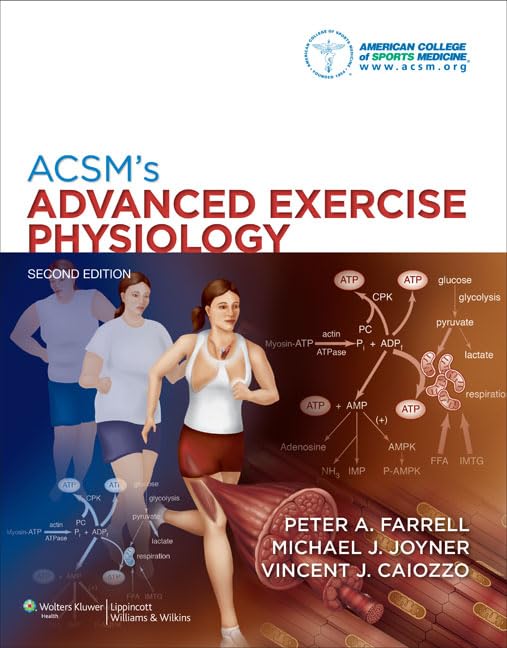
ACSM’s Advanced Exercise Physiology, 2nd Edition
Get ACSM’s Advanced Exercise Physiology, Second Edition — the text that bridges exercise science to primary research literature.
Want to preview before you buy? Click Request Free Sample and tell us which chapter or pages you’d like to see, along with your email address. We’ll send you those pages from the eBook so you can be sure it’s the right one before buying.
- Instant download & lifetime access Available as soon as your payment is confirmed. Your download link is also sent to the email address you provide at checkout, and you can download your purchased eBook anytime from My Account → Downloads with unlimited downloads. An account is created automatically using the same email address.
- Own your eBook Receive the available PDF/EPUB file directly after purchase. No rental or temporary access — download and keep your eBook for personal use with lifetime access.
- Full refund guarantee If the eBook you receive does not match the details and description provided on the product page, contact [email protected] and we’ll issue a full refund within 24 hours.
- Secure payment through PayPal Pay securely by debit or credit card or with your PayPal account. Your card details are processed by PayPal and are never stored on our site.
$13.99$23.00
The Challenge It Addresses
Every serious exercise physiologist eventually hits the same wall. Introductory courses teach the fundamentals, but the moment you open a high-quality research journal, the gap between what you learned and what you need to know becomes painfully obvious. ACSM’s Advanced Exercise Physiology was built to close that exact gap.
This Second Edition takes readers who already understand basic physiology during exercise and moves them into the depth required to engage with the primary literature. It is not another survey text. It is the translational bridge between classroom foundations and the research frontier.
For graduate students, the cost of that gap is real: struggling through journal articles, misinterpreting mechanistic studies, and losing confidence in seminars. This book eliminates that friction by providing the advanced framework you need before you ever open another paper. That is why it has become a standard graduate-level reference in the field.
Inside ACSM’s Advanced Exercise Physiology, 2nd Edition: A Full Overview
ACSM’s Advanced Exercise Physiology is a graduate-level textbook published by Lippincott Williams & Wilkins under the authority of the American College of Sports Medicine. The Second Edition, released in 2012, is edited by Peter A. Farrell, PhD, FACSM; Michael J. Joyner, MD, FACSM; and Vincent J. Caiozzo, PhD, FACSM.
Its stated purpose is precise: to bridge the gap between the basic understanding of physiology during exercise gained in an introductory course and the information presented through the primary literature in high-quality journals. That positioning makes it distinct among exercise physiology textbooks.
Written at a graduate level, the Second Edition enables experienced students to develop an in-depth understanding of how the body’s systems respond, adapt, and integrate during exercise. It assumes prior knowledge and builds upward — never downward. Every chapter pushes toward the mechanistic depth that advanced study and research demand.
Who Will Benefit Most
ACSM’s Advanced Exercise Physiology is designed for readers who already possess a foundational understanding of exercise physiology and are ready for advanced, mechanism-level depth. If you fit any of the profiles below, this book belongs on your shelf.
- Graduate students in exercise physiology, kinesiology, or human performance programs
- Doctoral candidates preparing for comprehensive exams or dissertation research
- Sports medicine fellows and residents seeking deeper physiological grounding
- Exercise science researchers who need a structured bridge to the primary literature
- Clinicians and rehabilitation professionals working with athletic or clinical populations
- Advanced coaches and performance staff who want the science behind programming decisions
If you are an undergraduate encountering exercise physiology for the first time, start with an introductory text and return to this one later. If you are already navigating journal articles with some confidence, this book will systematize and deepen what you already know.
The common thread among all ideal readers is preparation: this text rewards those who bring introductory knowledge and punishes those who skip it. Graduate-level exercise physiology is the target, and the content never strays from that standard.
If your graduate program emphasizes research literacy, this book aligns directly with that expectation. The rigor on every page matches what advanced coursework and journal clubs demand.
Inside: What You Will Master
The Second Edition delivers a systematic, systems-based exploration of the physiological response to exercise. Here is what you will take away from working through this text:
- How to interpret and evaluate the primary literature in exercise physiology with expert-level comprehension
- The cellular and molecular mechanisms underlying skeletal muscle contraction, fatigue, and adaptation
- Cardiovascular and hemodynamic responses to acute exercise and chronic training loads
- Pulmonary, acid-base, and gas-exchange dynamics during exercise across a range of intensities
- Neural control mechanisms governing motor unit recruitment, force production, and coordination
- Endocrine and metabolic regulation of fuel selection, including bioenergetics and substrate oxidation
- Thermoregulatory, fluid-balance, and environmental stress responses in heat, cold, and altitude
- How integrative physiology explains whole-body performance, from maximal oxygen uptake to fatigue resistance
Each topic is treated with the depth expected of graduate-level instruction — mechanisms, not just outcomes. The emphasis throughout is on understanding the “why” behind the physiological response, which is exactly the perspective required for reading primary research critically.
This is not a checklist of facts. It is a conceptual framework that stays with you long after the course ends, informing how you read papers, design studies, and interpret data.
How It Compares
ACSM’s Advanced Exercise Physiology outperforms every alternative because it occupies a unique position in the market: the advanced, integrative text that bridges introductory knowledge and the primary literature. Most textbooks fall into one of two camps, and neither serves the graduate reader well.
Introductory surveys stop at basic principles, spending hundreds of pages on material you already know. Specialized monographs assume deep familiarity with the field, leaving you scrambling for background. This book sits deliberately between them, providing the advanced framework that makes primary literature accessible.
Compared with journal article collections, it offers something primary literature cannot: structured, expert-authored context. Instead of piecing together understanding from dozens of papers, you get a coherent framework from three of the most respected names in the field. That efficiency is invaluable during a graduate program.
The ACSM brand adds another layer of authority. As the American College of Sports Medicine’s advanced text, it carries the weight of the world’s largest sports medicine and exercise science organization — a credential no independent author can match. No competing advanced exercise physiology text offers that combination of institutional authority and editorial expertise.
There is also a practical durability argument. A graduate text like this one is not consumed once and discarded; it becomes a reference you return to throughout your career. Few textbooks justify that kind of long-term investment, but this one does.
Who Wrote This Book
The editorial team behind the Second Edition is exceptional. Peter A. Farrell, PhD, FACSM, is a leading exercise physiologist with deep experience in endurance performance research. Michael J. Joyner, MD, FACSM, is a physician-researcher at Mayo Clinic renowned for his work on human performance, autonomic physiology, and oxygen transport. Vincent J. Caiozzo, PhD, FACSM, is an expert in skeletal muscle physiology and plasticity.
Together, these three editors represent decades of research leadership and teaching experience at the graduate level. Their collective expertise ensures that every chapter meets the standard of accuracy and depth that advanced students require.
Published by Lippincott Williams & Wilkins, a premier imprint of Wolters Kluwer, the book benefits from rigorous editorial review and professional production standards. This is the same publishing infrastructure that produces leading medical and health science references worldwide.
The Second Edition, published in 2012, reflects the maturation of the text after its initial reception, solidifying its place as a standard graduate-level reference in exercise physiology and sports medicine education.
Is It Worth It?
For its intended audience, yes — unequivocally. If you are a graduate student, researcher, or clinician who needs to move beyond introductory exercise physiology and engage confidently with the primary literature, this is one of the most efficient investments you can make in your professional education.
The book’s unique positioning — the bridge between basic understanding and research-level knowledge — means it earns its place on your shelf for years. It is the kind of text you consult repeatedly as you encounter new research questions, design studies, or prepare lectures.
Compared with the cost of graduate tuition or the time lost struggling through journal articles, the value is clear. This is a career-long reference, not a semester-long requirement.
The only readers who should hesitate are beginners. If you have not yet completed an introductory exercise physiology course, start there first. But if you are ready for advanced study, the Second Edition delivers exactly what it promises — and nothing else in the market fills that role as completely.
Add ACSM’s Advanced Exercise Physiology, 2nd Edition to Your Library
Your graduate program, research project, or clinical practice demands more than surface-level knowledge. ACSM’s Advanced Exercise Physiology, Second Edition gives you the advanced framework to read, interpret, and apply the primary literature with confidence — the exact skill that separates successful researchers from those who struggle.
Whether you are a graduate student preparing for comprehensive exams, a researcher designing your next study, or a clinician seeking deeper physiological insight, this is the text that bridges where you are and where you need to be. The Second Edition remains a current and authoritative reference for advanced study.
Add to cart now and secure your digital copy of this ACSM-endorsed text from Lippincott Williams & Wilkins, edited by Farrell, Joyner, and Caiozzo. Order today and close the gap between fundamentals and the research frontier — your future self in the lab, clinic, or classroom will thank you.
Related products

Feigin & Cherry’s Textbook of Pediatric Infectious Diseases, 9th Edition
$94.99Get the definitive 9th edition of Feigin and Cherry’s Textbook of Pediatric Infectious Diseases – the premier two-volume reference for pediatric ID professionals. Order now for instant digital access!
$271.00-
Guyton and Hall Textbook of Medical Physiology 15th Edition
$31.99Understand medical physiology with the clearest, most authoritative textbook. Guyton and Hall 15th edition explains how cells, tissues, and organs work together. Trusted by students and clinicians worldwide.
$81.00 -
Child and Adolescent Mental Health Screening, Evidence-Based Assessment, Intervention, and Health Promotion, 3rd Edition
$30.99The essential evidence-based guide for child and adolescent mental health screening, assessment, and intervention—updated third edition with practical tools and KySS framework.
$65.00 -
55 Cases in Neurology: Case Histories and Patient Perspectives by Mark McCarron
$22.99Boost your neurological diagnostic skills with 55 real-world cases and patient perspectives from a 20-year veteran neurologist — the essential casebook for junior doctors and trainees.
$41.00 -
Diseases and Disorders: A Nursing Therapeutics Manual, 6th Edition — Marilyn Sawyer Sommers
$17.00Master 240+ diseases with nursing diagnoses, interventions, and patient teaching — all in one portable, evidence-based manual for students and clinicians.
$31.00 -
Glandular Physiology and Therapy: AMA Symposium Ebook
$29.99Gain rare insight into early endocrinology with this authoritative AMA symposium. Essential for medical historians and hormone therapy researchers. Buy the ebook today.
$60.00 -
Essentials of Neuro-Psychiatry: A Classic Textbook of Nervous and Mental Disorders (1945)
$29.99Own a piece of medical history with this 1945 neuropsychiatry classic from Lea & Febiger. Essential for collectors and scholars. Add to cart today.
$60.00 -
Anthony’s Textbook of Anatomy & Physiology 18th Edition – Mosby
$20.00Master human anatomy and physiology with this clear, comprehensive 18th Edition from Mosby. Perfect for nursing and allied health students.
$62.00